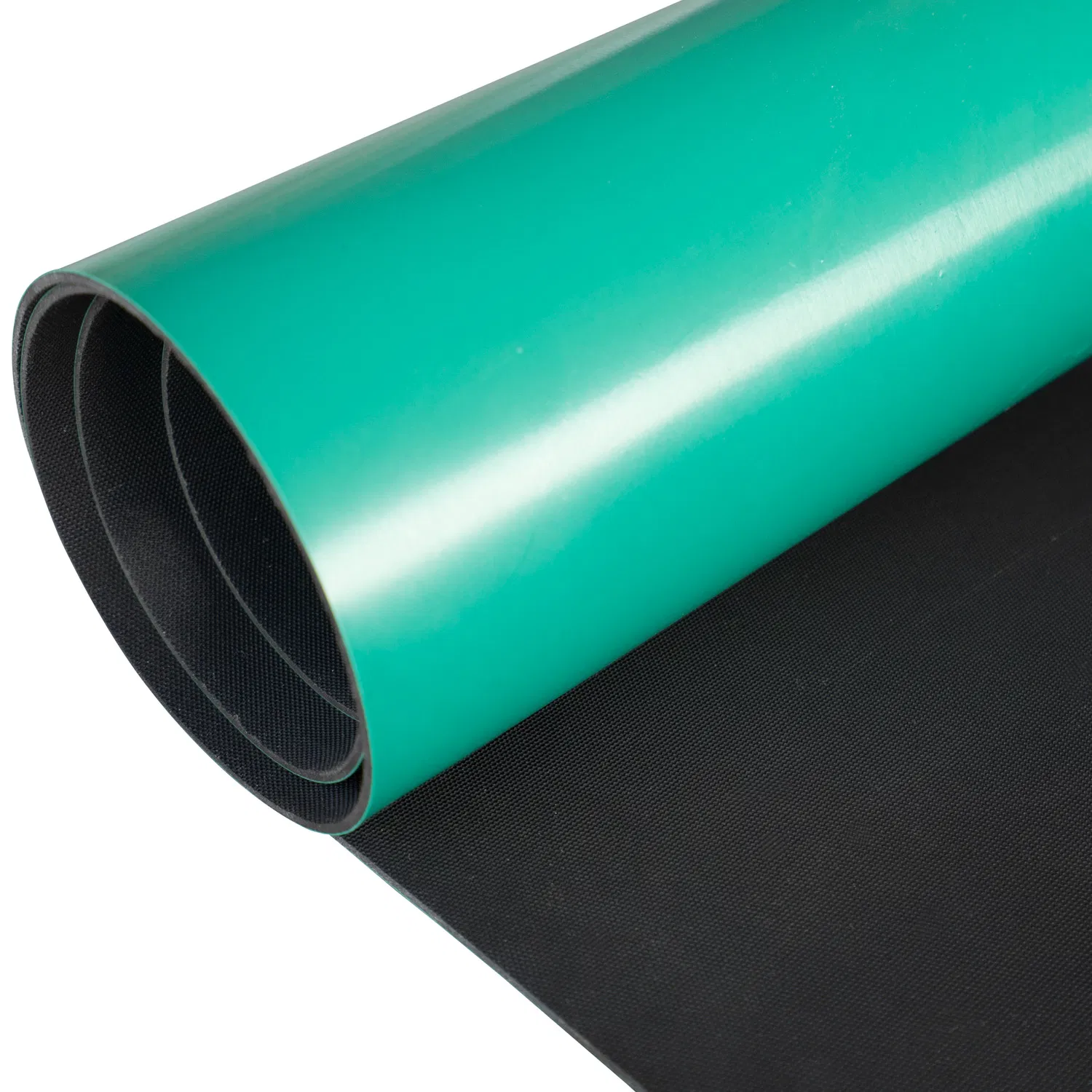
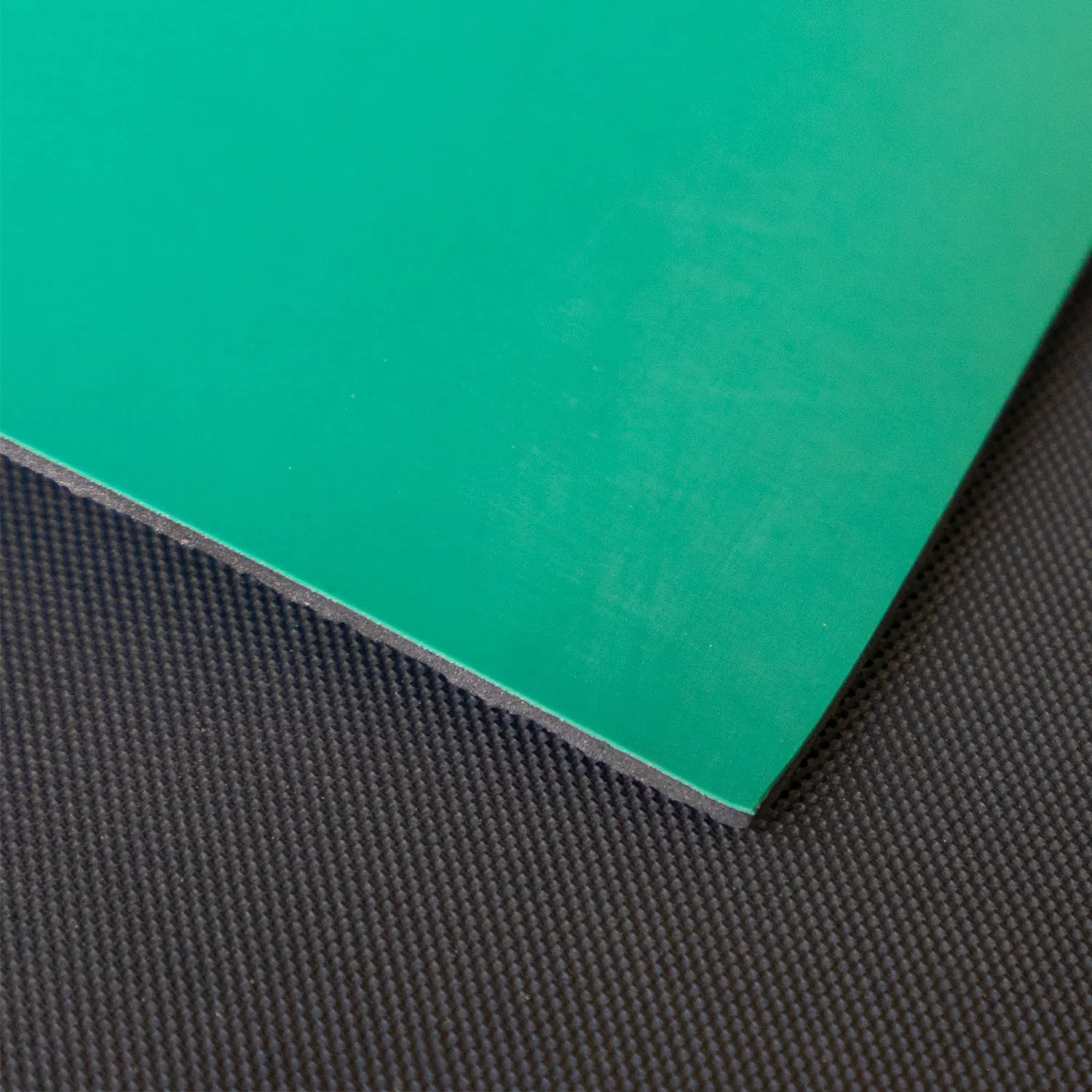
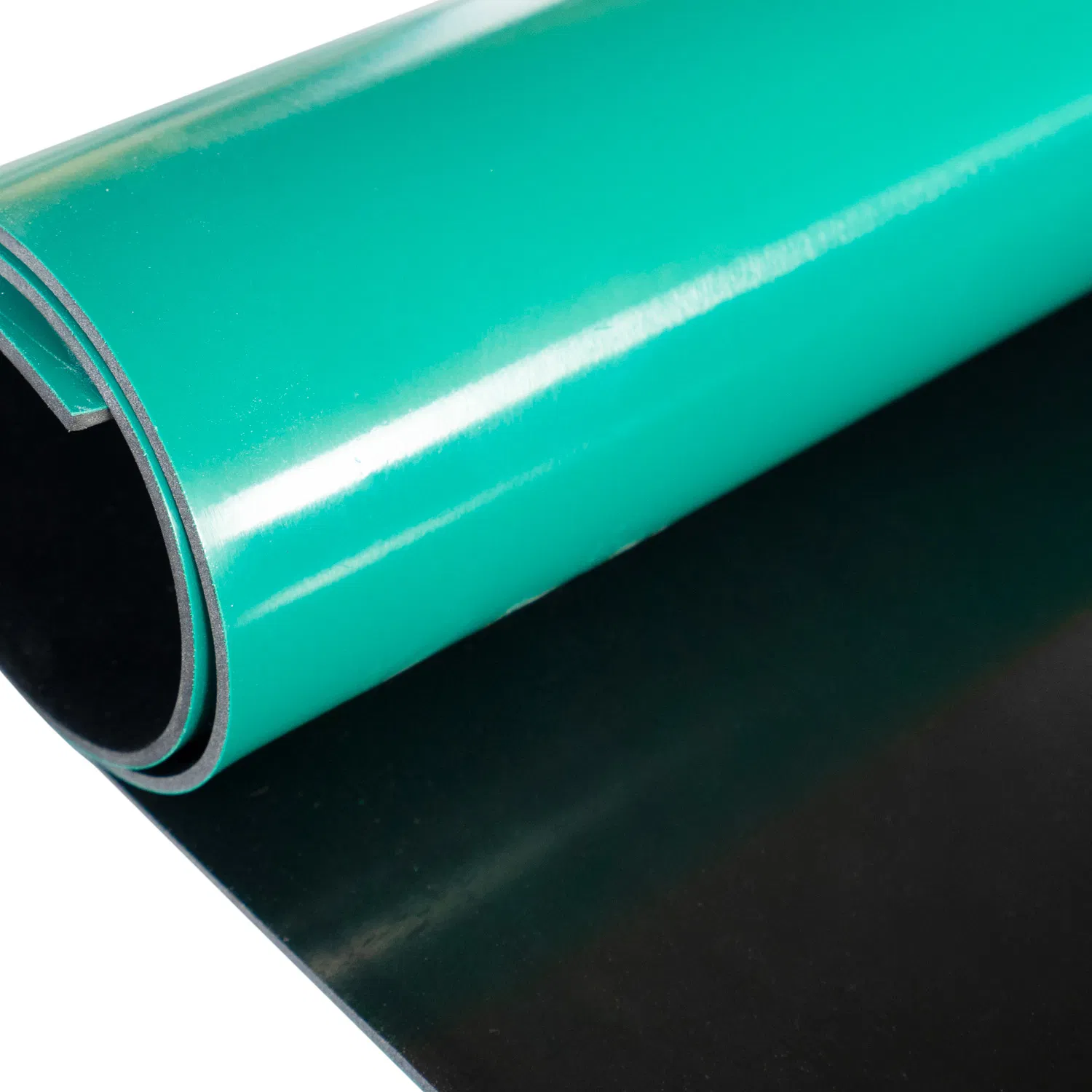
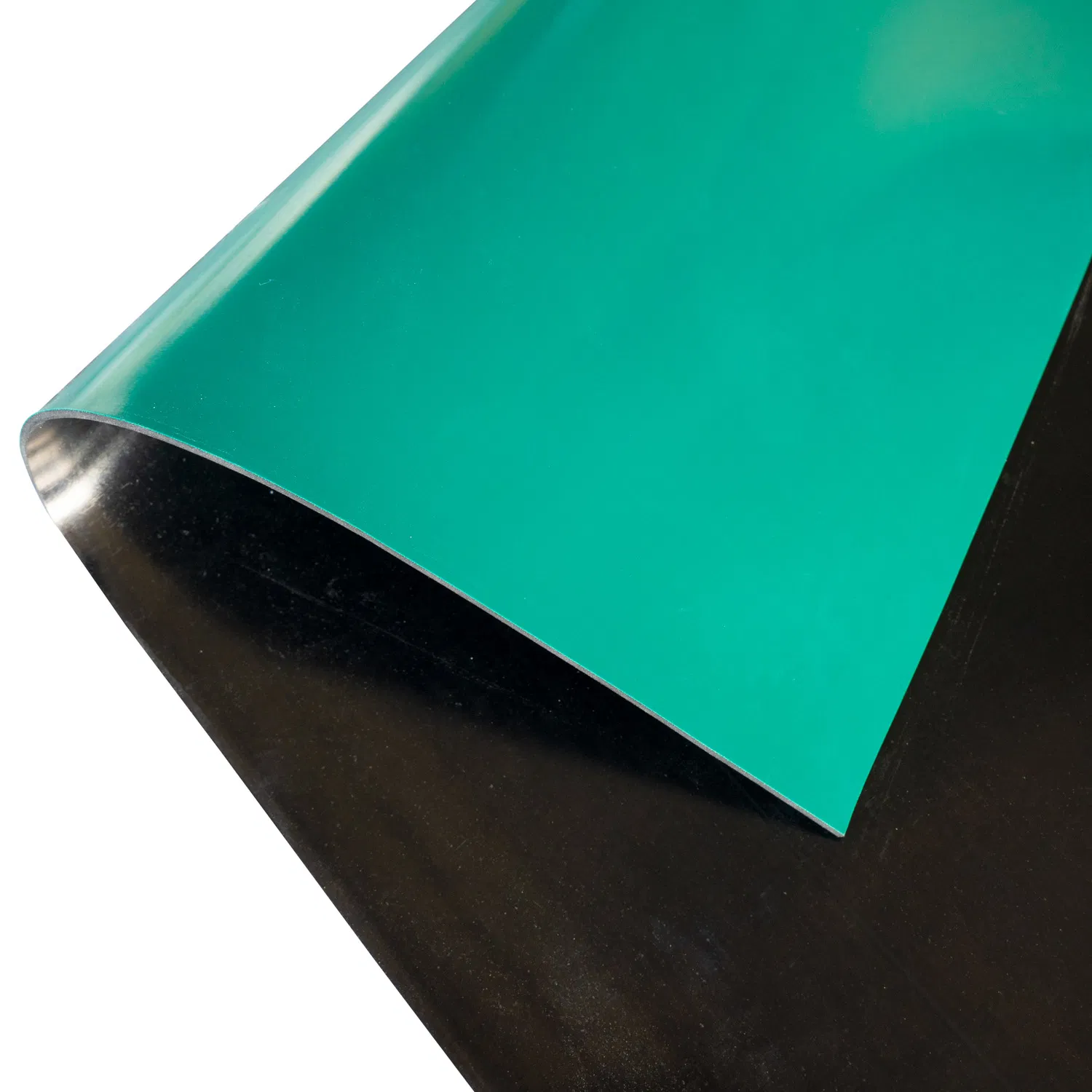
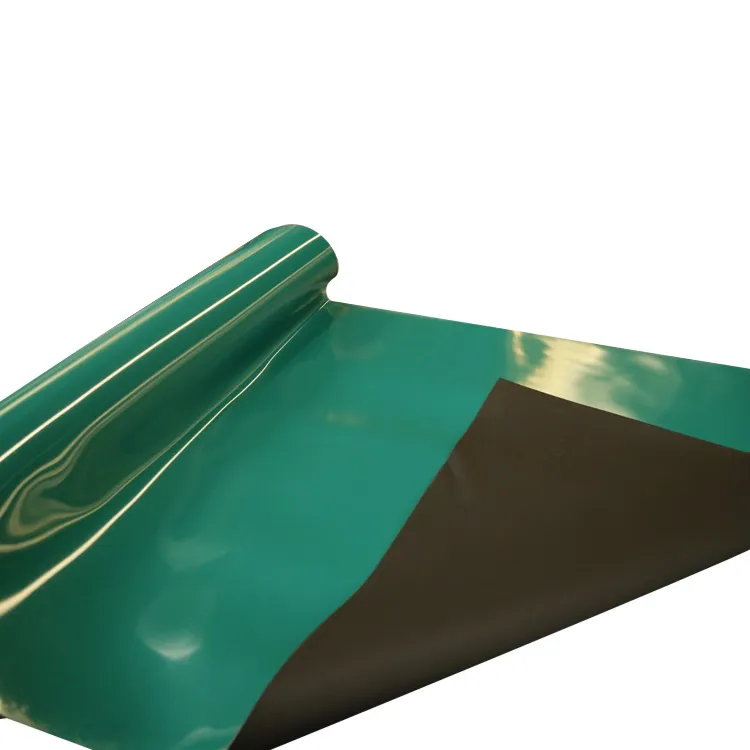
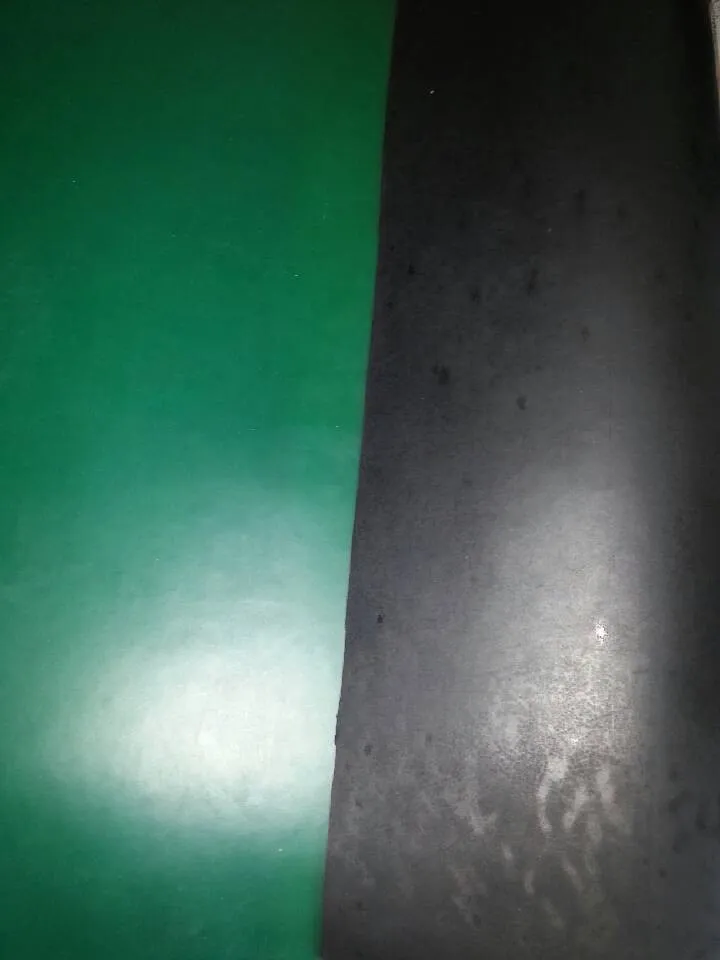
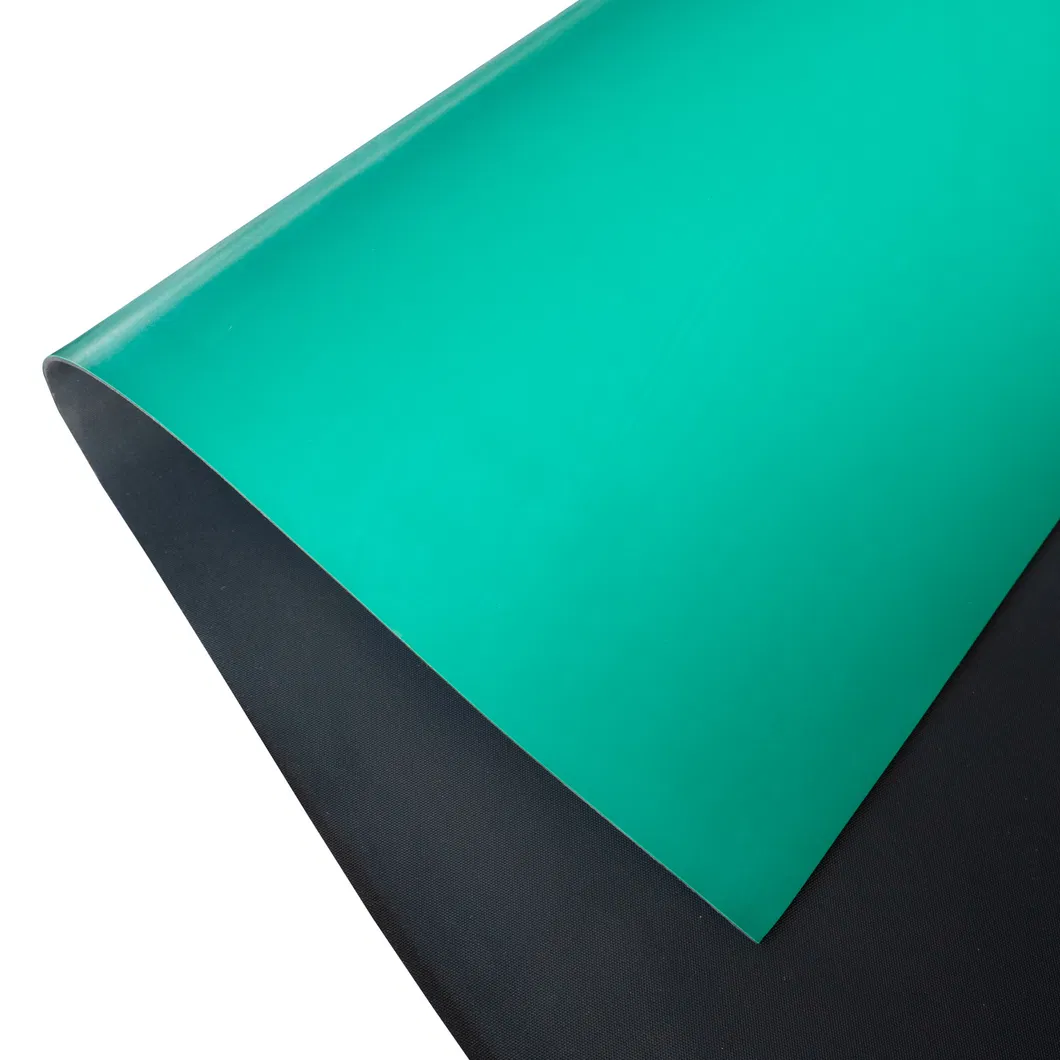
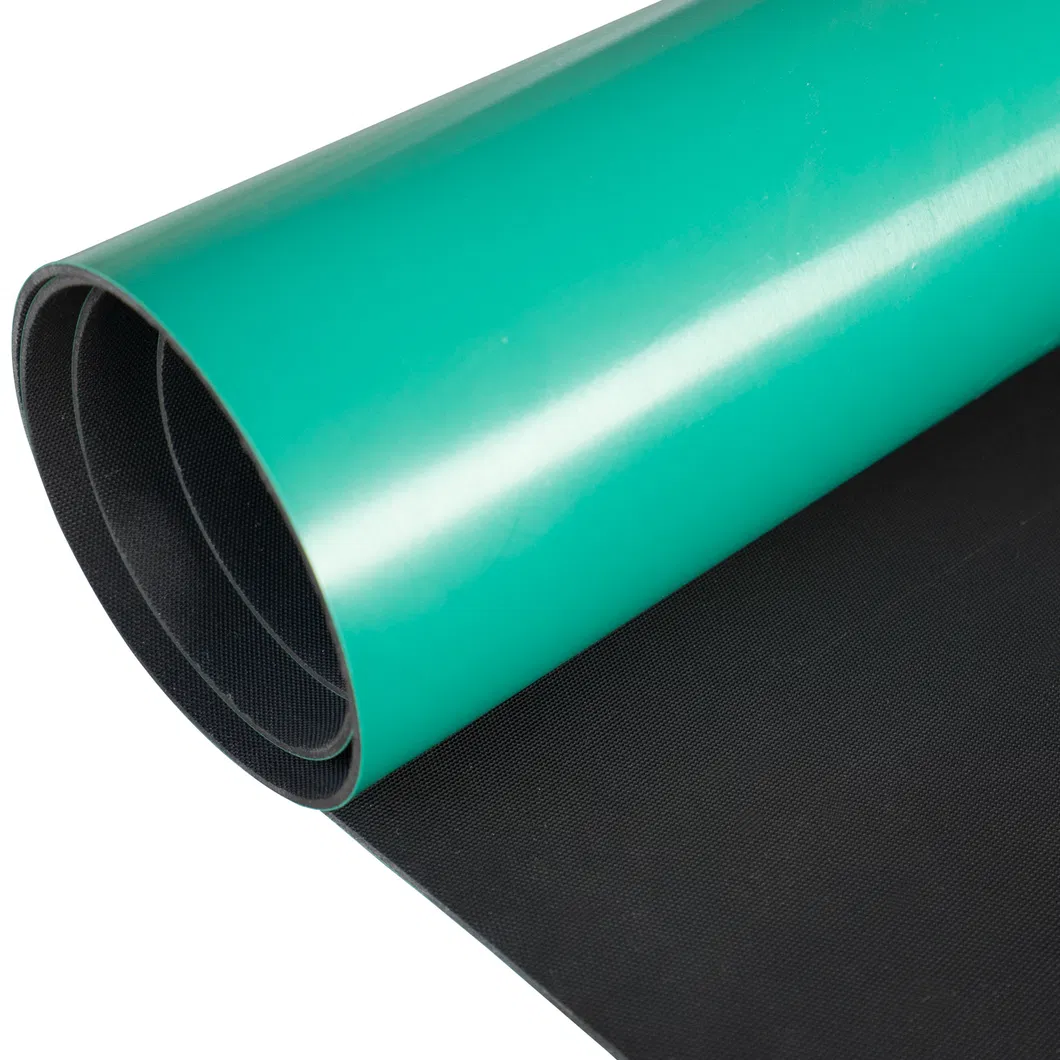
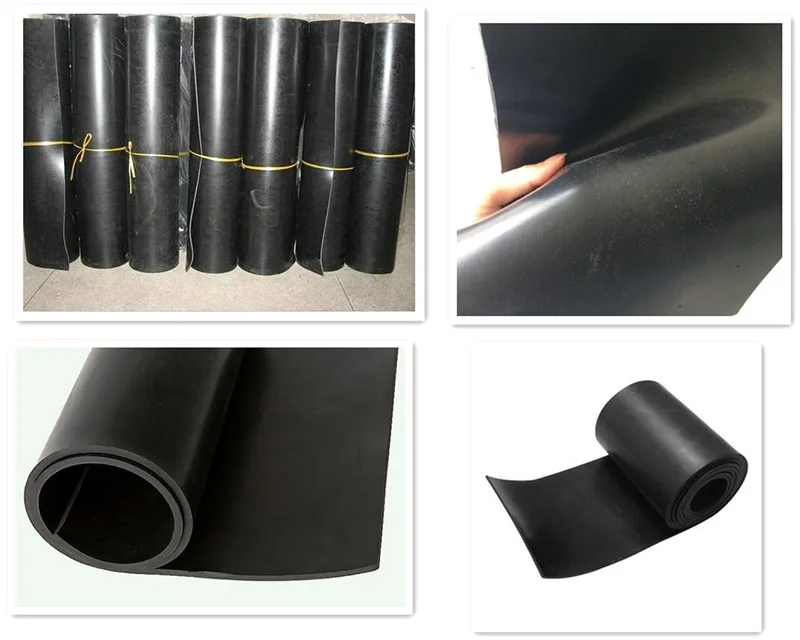
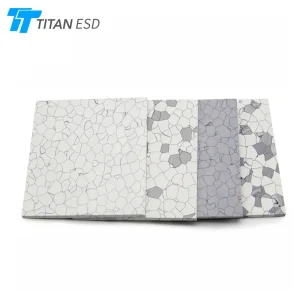
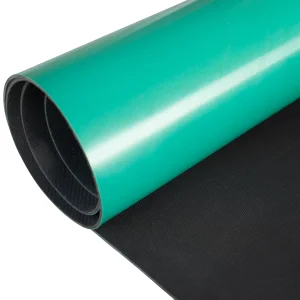
2mm Black/Blue ESD Anti Static Rubber Table Mat Floor for Cleanroom

Still deciding? Get samples of $ !
Request Sample

Product Description

Basic Specifications
Model NO.
esd mat
Name
ESD Mat
Material
Synthetic Rubber (NBR/SBR)
Hardness
65 Shore A
Density
1.5g/cm³
Tensile Strength
4 MPa
Elongation
200-250%
Thickness
2mm / 3mm
Standard Width
1m - 3m
Length
10m - 30m
Static Index
10^7-10^9 Ω (Top Layer)
Surface
Smooth or Textured
Product Description

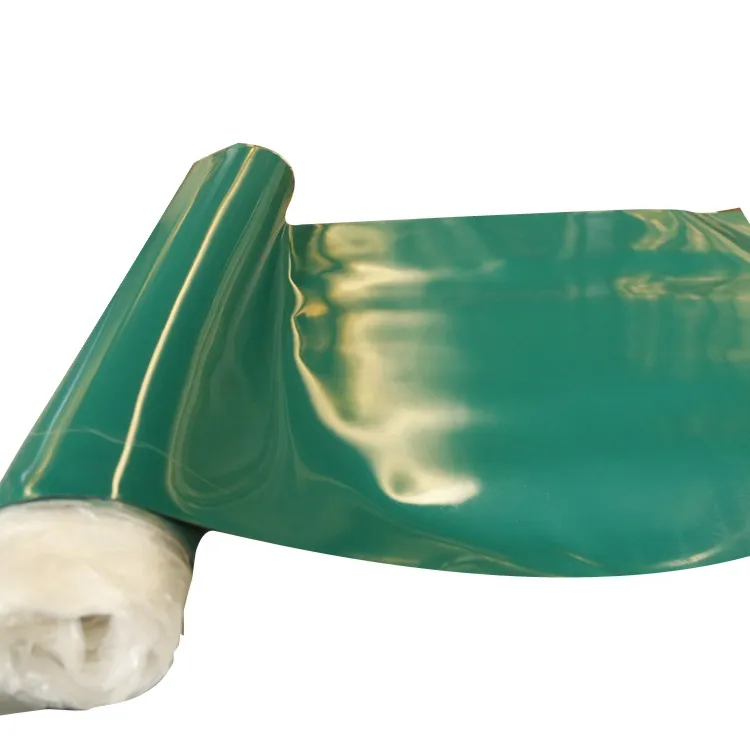
ESD dissipative mats are designed to harmlessly drain charges from personnel, ESD boxes, and components. These mats lie flat, are not affected by humidity, and offer superior resistance to abrasion, chemicals, and heat. They are exceptionally easy to clean and maintain.

Anti-static rubber sheets are essential for workshops and advanced laboratories involving electronic semiconductor devices, telecommunications equipment, and integrated circuits. They are ideal for bedding desktops, pipeline work surfaces, and shelves in microelectronic industries.

Key Features

  • High temperature and abrasion resistance
  • Anti-aging and no deformation properties
  • Excellent anti-acid, anti-alkali, and anti-chemical solvent properties
  • Natural pure color that does not diminish
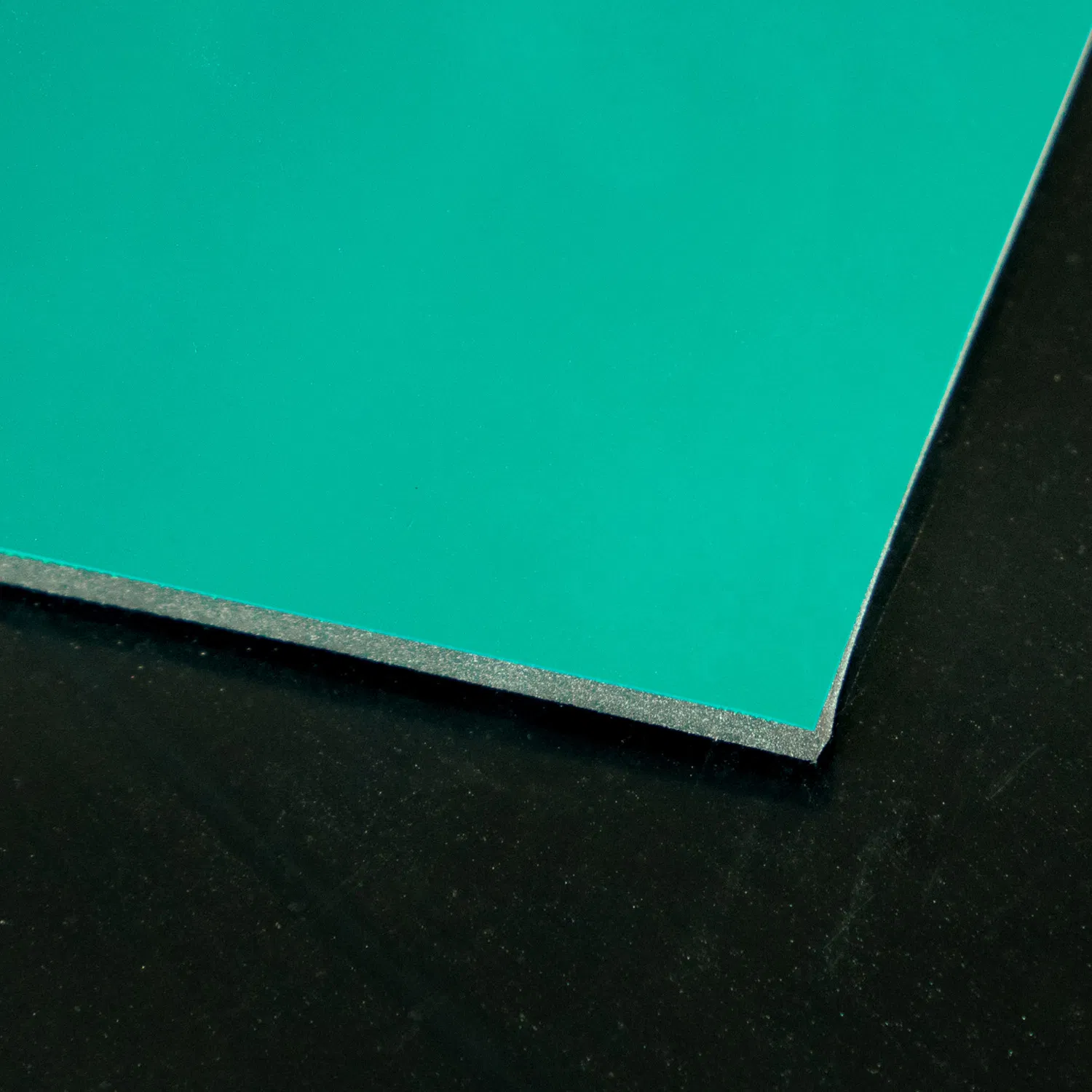
  • Double-layer structure: 0.5mm static-dissipative top layer and 1.5mm conductive bottom layer

Technical Data Sheet

Physical Properties & Specifications
Working Temperature-30°C to 100°C
Top Layer Resistance10^7-10^9 Ω
Bottom Layer Resistance10^3-10^5 Ω
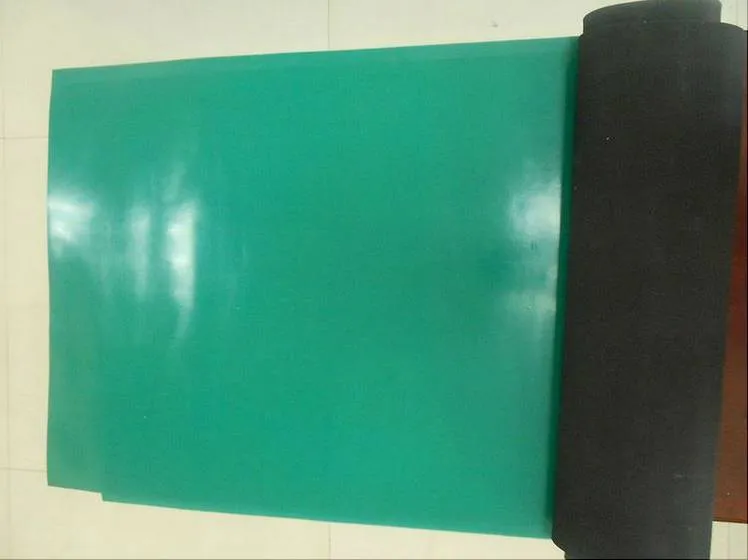
Color OptionsGreen+Black / Blue+Black
Attenuation Time0.1s
Standard Size2mm-3mm (T) x 1200mm (W) x 10m (L)
Rubber Material Varieties

1. Natural Rubber (NR): Outstanding physical properties and sealing; resistant to 80°C.

2. Styrene-Butadiene Rubber (SBR): Economical, flexible, and tough; excellent for HVAC and construction.

3. Neoprene (CR): Ideal for acids, alkalis, and open flames; handles 40°C to 120°C.

4. Nitrile (NBR): Excellent petroleum and oil resistance; good aging properties.

5. Silicone (Q): High-temperature resistance (up to 250°C); non-toxic and ozone resistant.

6. EPDM: Superior compatibility with chemicals; used in pharmaceutical and fertilizer plants.

7. Viton (FKM): The "Rubber King" for high heat, oil, and chemical corrosion resistance.
ESD Anti Static Rubber Mat 1
ESD Anti Static Rubber Mat 2
ESD Anti Static Rubber Mat 3
ESD Anti Static Rubber Mat 4
ESD Anti Static Rubber Mat 5
ESD Anti Static Rubber Mat 6
ESD Anti Static Rubber Mat 7
ESD Anti Static Rubber Mat 8
Related Rubber Products
Packaging & Logistics
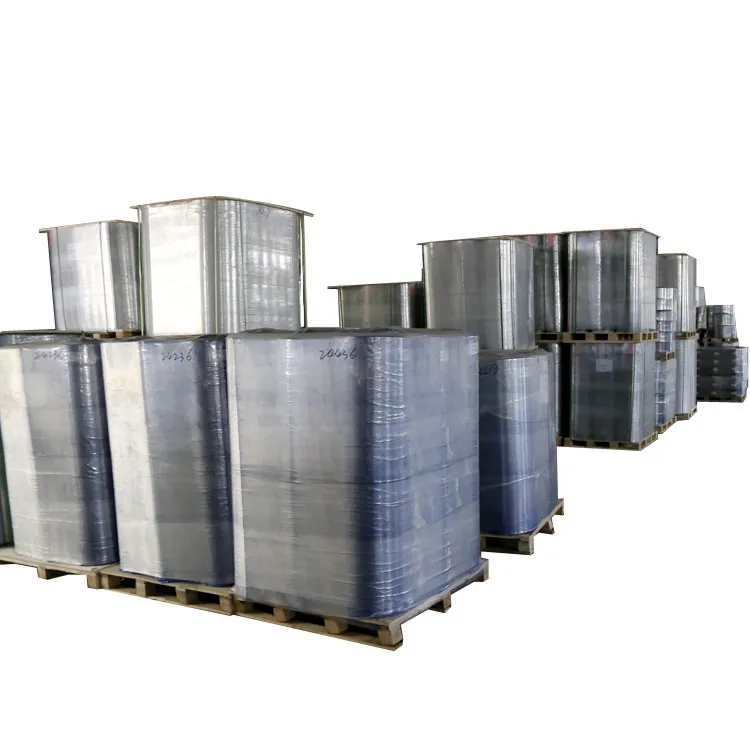
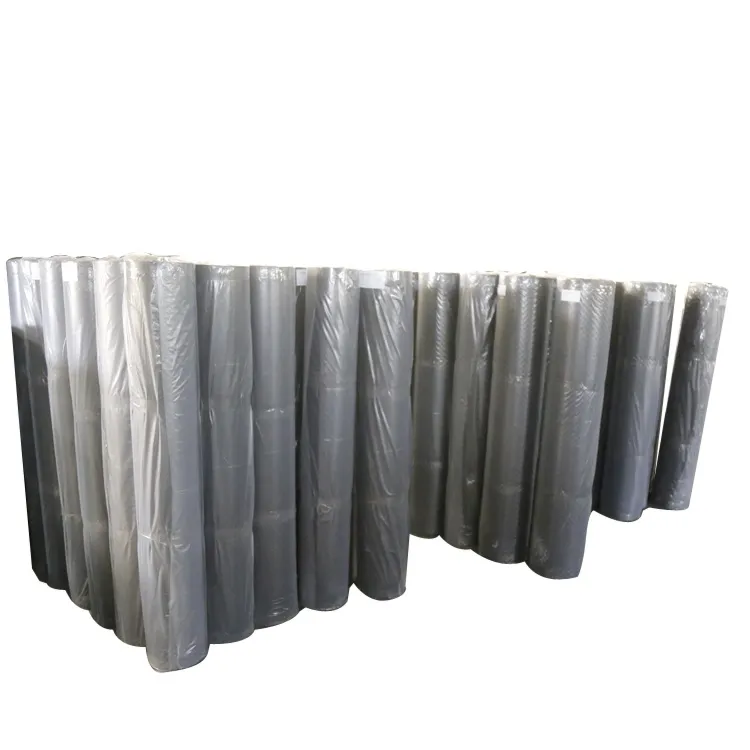
  • Wrapped in protective plastic film
  • Plastic film combined with PP woven bags
  • Securely packed on wooden pallets or in cases
  • Customized packaging available upon request
Packaging Detail 1
Packaging Detail 2
Frequently Asked Questions
Q1: What is the main purpose of an ESD rubber mat? A: It is designed to safely discharge static electricity from human bodies, tools, and components to protect sensitive microelectronic devices from electrostatic discharge (ESD) damage.
Q2: How is the ESD mat structured? A: Usually, it features a 2mm double-layer structure consisting of a 0.5mm static-dissipative top layer and a 1.5mm conductive bottom layer.
Q3: Are these mats resistant to high temperatures and chemicals? A: Yes, they offer excellent resistance to heat, abrasion, acids, alkalis, and various chemical solvents, making them suitable for industrial environments.
Q4: What are the available colors and finishes? A: Common colors include Green+Black and Blue+Black, with surface options of either a smooth or a textured finish.
Q5: Can the mats be used in cleanrooms? A: Absolutely. They are ideal for cleanrooms, laboratories, and workshops in the electronics and semiconductor industries.
Q6: What materials are these anti-static mats made from? A: They are primarily made from synthetic rubber materials, specifically a blend of NBR (Nitrile Butadiene Rubber) and SBR (Styrene-Butadiene Rubber).

Related Products