When selecting flooring materials, many homeowners face a critical choice: bamboo or hardwood. Each type has unique characteristics that cater to different preferences and needs. Understanding the differences requires careful consideration.
What are the pros and cons of bamboo vs hardwood? Bamboo is known for its sustainability. It grows rapidly and is environmentally friendly. However, it can be softer than hardwood, making it susceptible to dents. On the other hand, hardwood offers durability and a timeless appeal. Yet, its harvesting can contribute to deforestation, raising ethical concerns.
Homeowners must weigh aesthetics, durability, and environmental impact. Both options have their merits and drawbacks. A well-informed decision can enhance your living space, but it requires deep reflection on your priorities. Exploring these pros and cons will help you make a choice that fits your lifestyle and values.
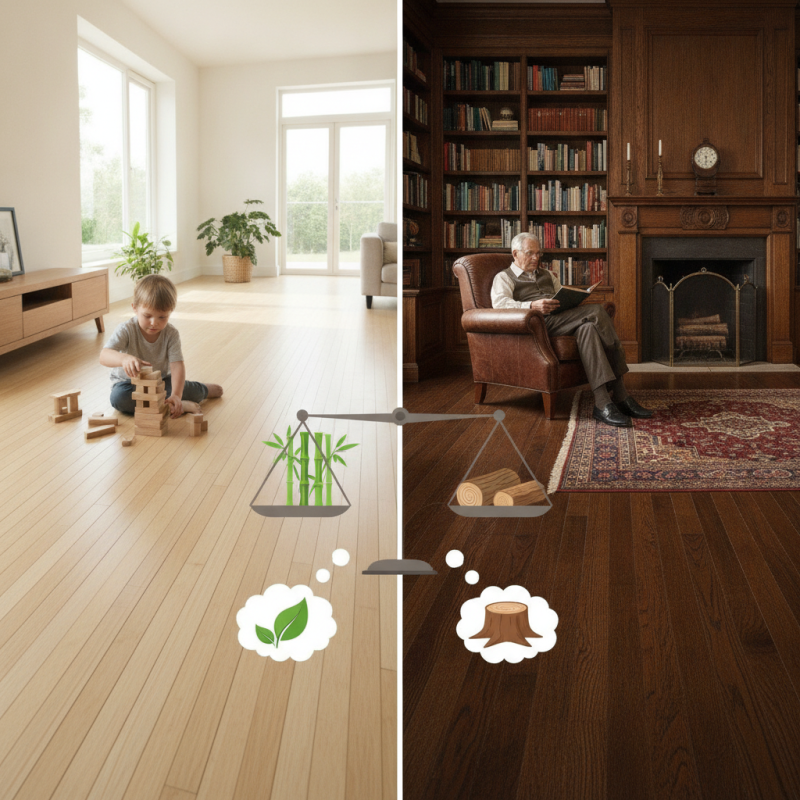
Bamboo is a remarkable material gaining popularity in construction and design. It grows rapidly, reaching maturity in just three to five years, compared to hardwoods that can take decades. According to a 2021 report published by the World Resources Institute, bamboo is considered one of the planet's most sustainable resources. It absorbs carbon dioxide at a rate 30% higher than trees, helping combat climate change.
The unique properties of bamboo make it advantageous for various applications. Its tensile strength exceeds that of steel, making it an excellent choice for flooring and furniture. Interestingly, bamboo can expand and contract less than hardwood, offering dimensional stability. However, it can be more susceptible to moisture damage if not properly treated.
While bamboo presents many benefits, it’s essential to consider its limitations. Some may find its visual appeal less versatile than hardwood, which offers a wide range of grains and finishes. Additionally, concerns over sourcing practices can cast doubts on its sustainability claims. Research indicates that poor harvesting methods could lead to deforestation, undermining its eco-friendly reputation. Weighing these pros and cons is crucial for making an informed choice.
Hardwood flooring has long been favored for its durability and timeless appeal. Recent studies indicate that hardwood can last over 30 years, making it a wise investment for homeowners. The warm aesthetic of hardwood is a significant draw, enhancing the character of any space. Many design experts highlight its versatility, which seamlessly complements various interior styles.
Another key advantage is its sustainability. Unlike many other building materials, hardwood is renewable when sourced responsibly. The Forest Stewardship Council (FSC) reports that sustainably harvested wood helps preserve ecosystems and reduces deforestation. This is vital, as nearly 38% of global forests are threatened by deforestation. Additionally, hardwood is recognized for its excellent thermal insulation, contributing to energy savings in homes.
However, choosing hardwood is not without challenges. Cost can be a barrier, as prices may vary significantly based on type and source. Installation complexity adds another factor; improper installation can lead to issues like warping. While hardwood offers many benefits, it is essential for consumers to weigh these aspects carefully, ensuring they select the right material for their needs.
When comparing durability between bamboo and hardwood, several factors come into play. Bamboo is technically a grass, yet it offers impressive strength. Its rapid growth makes it a sustainable choice. However, while bamboo can resist moisture, it's not as resilient to heavy impacts. This means that in high-traffic areas, bamboo may show wear more quickly than expected. In certain conditions, it might even crack or splinter over time.
Hardwood, on the other hand, has a long-standing reputation for durability. Species like oak and maple can endure heavy use without losing their integrity. However, hardwood can be susceptible to water damage if not treated properly. Its maintenance often requires more attention. Additionally, hardwood flooring can be prone to scratches from pets or furniture. The choice between the two materials often hinges on personal usage and specific environmental factors. Each option has merits and pitfalls worth considering.
| Criteria | Bamboo | Hardwood |
|---|---|---|
| Durability | Highly durable; can withstand heavy use | Very durable; varies by type |
| Water Resistance | Moderate; too much moisture can cause warping | Varies; some types are better than others |
| Renewability | Highly renewable, grows rapidly | Less renewable; slower growth rate |
| Cost | Generally less expensive | Can be more expensive depending on the type |
| Maintenance | Easy to maintain; requires regular cleaning | Requires occasional refinishing |
| Aesthetic Variety | Modern look; limited color options | Wide variety of colors and grains |
When considering the environmental impact of bamboo and hardwood, sustainability plays a crucial role. Bamboo is a fast-growing plant. It can reach maturity in just three to five years. This rapid growth makes bamboo an excellent renewable resource. It absorbs carbon dioxide efficiently, helping reduce greenhouse gases. Moreover, bamboo's root system stabilizes the soil, preventing erosion.
Hardwood, on the other hand, typically comes from trees that take decades to mature. While well-managed forests can provide sustainable hardwood, deforestation remains a significant concern. Many hardwood species face overharvesting. This contributes to biodiversity loss and habitat destruction. Although some hardwood is sourced sustainably, there isn’t a uniform standard. Consumers need to do their research.
Choosing between these two options is not straightforward. Bamboo may seem like the better choice for the environment. However, sourcing practices can vary widely. Not all bamboo is harvested sustainably. Similarly, responsibly managed hardwood can support forest ecosystems. The complexities of each material call for careful consideration.
When comparing bamboo and hardwood flooring, cost is a critical factor. Bamboo typically ranges from $3 to $8 per square foot, while hardwood prices vary significantly, from $5 to $20 or more per square foot. A study by the National Wood Flooring Association highlights that hardwood can be a long-term investment, often increasing home value. However, bamboo offers a more budget-friendly option without sacrificing aesthetics.
Notably, bamboo is also a renewable resource, growing much faster than trees. This eco-friendliness often attracts environmentally conscious buyers, despite the potential trade-offs in durability. A report from the National Association of Home Builders indicates that some bamboo varieties can be less resistant to scratches compared to traditional hardwood. This durability issue could lead to additional costs for repairs or replacements in the long run.
Another aspect is maintenance costs. Bamboo may require special cleaning products, impacting overall expenses. Hardwood, while more durable, can suffer from fading or warping over time, particularly in humid climates. Therefore, homeowners must consider long-term implications. Evaluating pricing differences requires a careful analysis of initial investment versus potential future costs.
This chart compares the average cost per square foot of bamboo flooring to hardwood flooring. As shown, bamboo is generally more affordable with an average cost of $3.50 per square foot, while hardwood costs around $6.00 per square foot. This cost analysis can help you make an informed decision based on budget considerations.
: Hardwood flooring can last over 30 years with proper care and maintenance.
Its durability and timeless aesthetic appeal enhance the character of any room.
Yes, hardwood is a renewable resource when sourced responsibly, helping to preserve ecosystems.
Hardwood offers excellent thermal insulation, which can lead to energy savings in homes.
Cost and installation complexity can be significant barriers for potential buyers.
Bamboo is strong but may wear quicker in high-traffic areas compared to hardwood.
Hardwood needs regular attention to prevent scratches and water damage.
Yes, under certain conditions, bamboo may crack or splinter over time.
Although moisture-resistant, bamboo isn't as durable against heavy impacts as hardwood.
They need to weigh durability, maintenance, and their specific environmental conditions.
When considering flooring options, one often faces the question: What are the pros and cons of bamboo vs hardwood? Bamboo, known for its fast growth and renewability, offers a unique aesthetic and impressive strength, making it a popular choice for eco-conscious consumers. It boasts resilience against moisture and is often less expensive than hardwood, providing a budget-friendly alternative.
On the other hand, hardwood is renowned for its durability and timeless appeal. It tends to have a longer lifespan and is available in a variety of species, each with distinct characteristics. However, it may come with a higher price tag and a more significant environmental footprint due to slower growth rates. By comparing durability, environmental impact, and cost, consumers can make an informed decision tailored to their needs and values.
Prairie Floor