China’s cork flooring market is gaining attention among architects, distributors, and environmentally conscious homeowners. This article introduces ten notable Chinese cork flooring suppliers and examines what separates reliable manufacturers from ordinary sellers. The comparison considers product quality, sourcing practices, factory experience, technical support, customization, and after-sales service.
A central question guides the discussion: Why is cork a renewable flooring resource? Cork comes from the outer bark of cork oak trees, which can be harvested without cutting them down. The bark usually regrows over several years. Healthy cork forests may continue producing material for decades, while supporting soil protection and wildlife. The process sounds simple. It still requires responsible management.
Experienced buyers should look beyond attractive samples. They should ask about cork origin, formaldehyde emissions, surface coatings, moisture resistance, installation methods, and test documentation. A warm cork plank may feel comfortable in a quiet bedroom, but its performance depends on density, backing, finish, and maintenance. Factory photographs alone prove little. Supplier claims also need verification.
This overview uses practical and professional criteria rather than promotional language. It considers how companies respond to technical questions, provide samples, explain production limits, and handle quality problems. Some rankings may remain subjective because supplier data can change. That is worth admitting. A manufacturer with strong export experience may not offer the best product for every project. Careful comparison remains essential before placing an order.
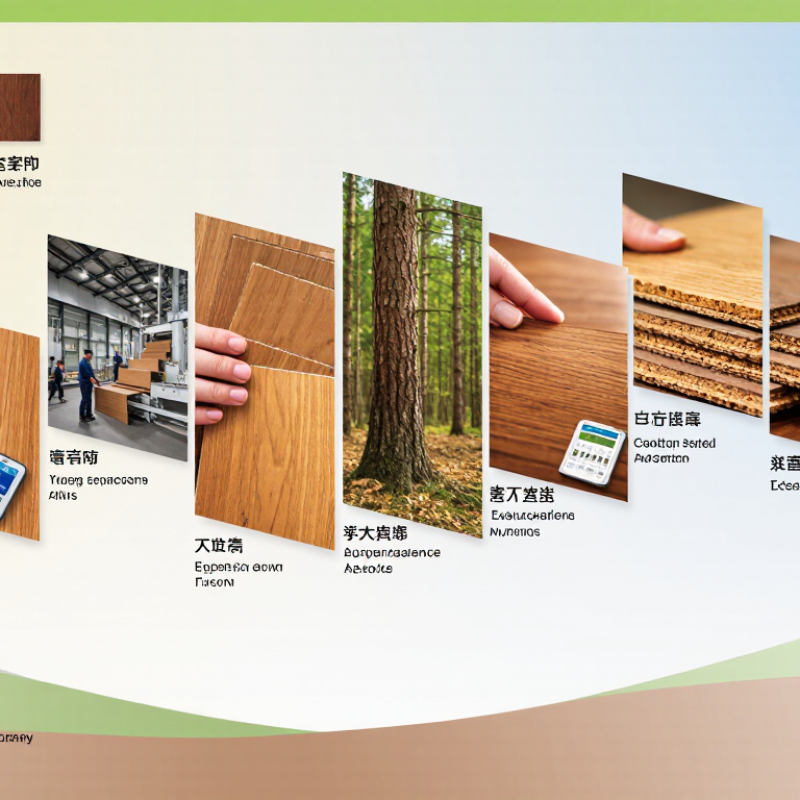
Cork flooring is made from the outer bark of cork oak trees. The bark is carefully removed without cutting down the tree. This allows the oak to remain alive and continue growing. New bark usually develops within seven to ten years. Skilled harvesters use specialized tools to protect the trunk and inner tissues. The same tree may provide cork for many decades. That repeated harvest makes cork a renewable flooring material. It is not an instant process.
Renewability still depends on responsible forestry. Healthy forests need time, careful harvesting, and protection from fire and soil damage. Flooring production also uses energy, adhesives, finishes, and transport. Therefore, cork is not automatically impact-free. Reliable suppliers should explain their harvesting practices, product composition, and certification records. Look for clear technical data, not only attractive environmental language. Some claims sound greener than the evidence.
Tips: Check the wear layer and finish before buying. A dense, well-sealed surface handles daily footsteps better. Place felt pads under chairs and wipe spills quickly. Cork feels warm underfoot, but excessive moisture can damage poorly sealed edges. Ask for installation guidance and maintenance instructions. Small details matter. A sample can reveal texture, odor, and color changes under natural light.
Cork begins in the bark of the cork oak, not in a logging operation. Skilled workers remove the outer bark with special axes, leaving the living tree intact. Harvesting usually occurs every nine to twelve years, when the bark has regained suitable thickness. The tree continues growing and absorbing carbon during this cycle. Fresh cork feels light, springy, and uneven. That texture is important because millions of tiny air cells provide insulation and resilience.
At the factory, workers inspect the bark, boil it, and dry it carefully. The material is then ground into granules, mixed with binders, and pressed into dense blocks. These blocks are sliced into flooring layers and finished with protective coatings. Quality checks should examine thickness, density, moisture resistance, edge stability, and surface wear. Properly made cork flooring can recover from small dents and reduce impact noise underfoot. It also feels warmer than many hard surfaces.
Renewable does not mean impact-free. Transport, adhesives, coatings, and factory energy still matter. A reliable supplier should provide clear information about harvesting intervals, material composition, emissions testing, and maintenance requirements. Buyers comparing Chinese flooring suppliers should request samples and inspect the backing, not only the decorative surface. Cork can last for years, but poor installation or standing water may shorten its life. This is where the material’s reputation needs careful, practical judgment.
China’s top 10 cork flooring suppliers show different strengths rather than one universal advantage. Supplier 1 focuses on stable European cork sourcing. Supplier 2 offers click-lock panels for faster installation. Supplier 3 develops acoustic flooring for apartments and offices. Supplier 4 supports private-label production and flexible order volumes. Supplier 5 specializes in water-resistant surface finishes. Supplier 6 provides custom colors and printed textures. Supplier 7 emphasizes low-emission adhesives and indoor-air testing. Supplier 8 serves commercial projects with reinforced wear layers. Supplier 9 combines cork with engineered wood or rigid cores. Supplier 10 stands out through export documentation and responsive technical support.
Their renewable-material claims should be checked carefully. APCOR’s industry statistics report that cork oak forests cover roughly 2.2 million hectares across the western Mediterranean. Cork bark can be harvested repeatedly, usually every nine years, without cutting down the tree. That detail matters. The floor is not automatically sustainable.
Reports from Grand View Research identify growing demand for natural and low-impact flooring, especially in residential renovation and hospitality projects. Yet supplier quality still depends on binder chemistry, backing materials, factory energy use, and transport distance. A useful buyer review should request test reports for formaldehyde, abrasion, slip resistance, and dimensional stability. Product samples can reveal uneven printing, brittle edges, or a strong adhesive odor. Those small faults are easy to overlook. They should not be.
Cork is renewable because the cork oak remains alive after its outer bark is carefully removed. The first commercial harvest generally takes place at about 25 years of tree age, followed by subsequent harvests at intervals of approximately 9 years. The chart shows the cumulative number of potential harvests over a 70-year period using this commonly cited production cycle.
When comparing Chinese cork flooring suppliers, inspect evidence before polished catalogues. Cork is renewable because cork oak bark regrows after harvesting. FAO’s Global Forest Resources Assessment 2020 identifies cork oak landscapes across roughly 2.1 million Mediterranean hectares. The trees remain standing. That matters, but “renewable” does not guarantee responsible production.
Request three physical samples from each shortlisted supplier. Check density, backing adhesion, edge accuracy, and surface compression after heavy furniture use. Ask for recent batch records, not only laboratory samples. EN 12104 specifies performance requirements for cork floor coverings, including dimensions, wear, and resistance properties. Compare test methods carefully. Different laboratories may produce different-looking numbers.
Ask for moisture content, formaldehyde emissions, dimensional stability, fire classification, and abrasion results. The European Commission’s Product Environmental Footprint method recommends examining impacts across raw materials, manufacturing, transport, use, and disposal. A low factory price can hide weak backing or excessive packaging. Sometimes, it does. Request a factory audit, production photographs, and the legal entity shown on test reports. Verify that report dates match the supplied product code.
Use a 1-to-5 score sheet. Include response speed, sample consistency, certification scope, minimum order quantity, and complaint handling. A supplier promising every specification deserves closer questioning. My own caution is simple: one attractive sample proves very little. Open several cartons from different production dates. Look for shade variation, curled corners, uneven coating, and the small defects catalogues rarely show.
China Top 10 Cork Flooring Suppliers: What Is Cork Renewable?
Before importing cork flooring from China, verify the material, factory, and test evidence. Cork comes from the outer bark of cork oak trees. Harvesting usually occurs every nine years without cutting the tree. According to APCOR industry data, cork oak landscapes cover about 2.2 million hectares across the Mediterranean region. This supports cork’s renewable reputation, but “renewable” does not guarantee responsible sourcing. Ask for harvest origin, bark age, supplier traceability, and forestry certification.
Check the technical file carefully. It should state cork content, backing material, wear layer, thickness tolerance, moisture resistance, and installation method. Request current laboratory reports for formaldehyde, volatile organic compounds, dimensional stability, fire behavior, and slip resistance. European flooring standards, including EN 12104 and EN 14041, provide useful benchmarks. The Global Forest Resources Assessment also stresses that forest sustainability depends on regeneration, biodiversity, and management, not only harvest frequency. A certificate copied into a sales presentation is not enough. I would verify its number independently.
Tips: Order samples from different production lots. Measure thickness at several points. Leave samples in your target climate for at least 48 hours, then inspect curling, odor, and joint alignment. Confirm carton strength, pallet protection, replacement rates, and inspection timing in writing. Compare the packing list with the commercial invoice. A low factory price may hide weak backing or excessive adhesive. My own caution: glossy photos reveal almost nothing. An on-site audit or independent pre-shipment inspection costs money, but one failed container costs more.
Supplier due-diligence and product-verification checklist
| No. | Evaluation Dimension | Verified Information or Practical Benchmark | Documents or Tests to Request | Importing Risk Signal |
|---|---|---|---|---|
| 1 | Cork Renewable Origin | Cork is harvested from the outer bark of cork oak trees without cutting down the tree. The first commercial harvest generally occurs after approximately 20–25 years, followed by harvesting cycles of about 9–12 years. | Raw-material origin statement, chain-of-custody records, forestry certification where applicable, and a written confirmation that the material is natural cork. | Vague claims such as “eco-friendly” without raw-material traceability or information about cork content. |
| 2 | Product Composition | Cork flooring may be supplied as solid cork, cork composite, glue-down tile, floating plank, or a multilayer product with HDF, backing, finish, and cork wear layers. The structure affects durability, moisture resistance, and recyclability. | Full construction diagram, layer thicknesses, technical data sheet, percentage of cork by weight or volume, and sample cross-section. | The supplier cannot clearly identify the core, backing, adhesive, surface finish, or actual cork layer thickness. |
| 3 | Applicable Product Standard | Cork floor coverings are commonly assessed against relevant flooring requirements such as EN 12104. Depending on the product and destination market, additional requirements may apply for safety, performance, and conformity marking. | Test reports showing the exact product code, test method, laboratory details, test date, and applicable market requirements. | A certificate is provided for a different product, an expired report, or a document with no traceable laboratory information. |
| 4 | Dimensional Accuracy | Correct plank or tile length, width, thickness, squareness, edge geometry, and click-joint fit are essential for a stable installation. Tolerances must be agreed in writing because they vary by construction and standard. | Pre-shipment inspection report, calibrated measurement records, approved reference sample, and agreed dimensional tolerances. | Excessive size variation, bowed boards, uneven edges, open joints, or differences between the approved sample and mass production. |
| 5 | Moisture and Stability | Cork is moisture-sensitive during storage and installation. Flooring should be protected from water exposure and installed on a dry, level subfloor according to the product instructions. | Moisture-content specification, water-resistance or dimensional-stability test results where relevant, packaging instructions, and installation manual. | Wet cartons, insufficient pallet protection, no humidity guidance, or a claim that the product is suitable for continuously wet areas without evidence. |
| 6 | Surface Wear and Finish | UV-cured coatings, polyurethane finishes, waxes, and other surface systems provide different levels of scratch resistance, maintenance needs, and repairability. Commercial and residential use should be specified separately. | Abrasion or wear test results where applicable, finish specification, maintenance instructions, stain-resistance data, and intended-use classification. | No defined use class, inconsistent gloss or color, weak coating adhesion, or visible surface defects on samples. |
| 7 | Indoor Air and Chemical Emissions | Adhesives, coatings, binders, and HDF cores can affect formaldehyde and volatile organic compound emissions. Natural cork content alone does not prove low-emission performance. | Formaldehyde test results such as EN 717-1 where applicable, VOC test results for the destination market, adhesive safety data, and material safety documentation. | “Zero formaldehyde” claims without a test method, laboratory, sample identification, or reporting limit. |
| 8 | Fire and Slip Performance | Fire classification and slip performance depend on the complete flooring assembly, including the finish, backing, adhesive, and installation method. Results cannot automatically be transferred between product constructions. | Fire-test classification, slip-resistance report where required, installation conditions, and destination-country compliance documents. | A test report covers only raw cork or a different finish, or the supplier cannot confirm the tested construction. |
| 9 | Packaging and Container Loading | Cork flooring should be packed to reduce edge damage, compression, abrasion, and moisture exposure. Carton labels should match the purchase order and shipping documents. | Packaging specification, carton dimensions and net/gross weights, pallet plan, loading photos, moisture-protection method, and packing-list template. | Unprotected edges, mixed batches without labels, excessive carton weight, poor pallet stability, or unsealed moisture-sensitive packaging. |
| 10 | Commercial and Import Documentation | The importer should confirm the correct HS classification, country-of-origin requirements, labeling rules, Incoterms, payment terms, warranty terms, and destination-market compliance before placing a purchase order. | Pro forma invoice, commercial invoice, packing list, bill of lading, certificate of origin when required, product specification, insurance details, and third-party pre-shipment inspection. | Inconsistent product descriptions, incorrect weights or quantities, unclear Incoterms, missing origin information, or payment requested before document verification. |
It is made from the outer bark of cork oak trees. The tree remains alive after harvesting. Fresh bark grows again over time.
Cork oak bark can regrow after careful removal. Harvesting may repeat every seven to twelve years. Renewal is gradual, not instant.
Yes. Factory energy, adhesives, coatings, packaging, and transport still create impacts. Renewable does not mean impact-free.
Workers inspect, boil, and dry the bark. They grind it into granules and mix it with binders. Pressed blocks become flooring layers.
Check density, backing adhesion, edge accuracy, and coating evenness. Examine the sample under natural light. Look for odor and color changes.
Request three physical samples from each supplier. Compare recent batch records, not only polished catalogues. Ask for testing and factory information.
Request moisture content, emissions data, dimensional stability, fire classification, and abrasion results. Confirm that reports match the supplied product code.
Use felt pads under chair legs. Wipe spills quickly. Avoid standing water near edges. Follow the supplier’s installation and cleaning instructions.
Cork feels warm and slightly springy underfoot. Its tiny air cells can reduce impact noise. Poor installation may still cause problems.
No. One sample is not enough. Open cartons from different production dates. Check shade variation, curled corners, uneven coating, and small defects.
This article explains what cork flooring is and why is cork a renewable flooring resource. Cork comes from the outer bark of cork oak trees, which can be carefully harvested without cutting down the trees. After collection, the bark is dried, processed, bonded, and finished into durable flooring products with natural resilience, thermal insulation, sound reduction, and moisture resistance. Because the trees continue to grow and regenerate their bark, cork can be harvested repeatedly as part of a long-term sustainable cycle.
The article also introduces China’s top 10 cork flooring suppliers by focusing on their main strengths, such as manufacturing capacity, product variety, customization, quality control, and export experience, without relying on brand names. It explains how buyers can compare suppliers by reviewing raw material quality, density, surface treatment, dimensional stability, certifications, testing procedures, and production consistency. Before importing, purchasers should also confirm samples, packaging, specifications, lead times, communication, inspection arrangements, and shipping documentation to reduce risks and select a dependable flooring partner.
Prairie Floor