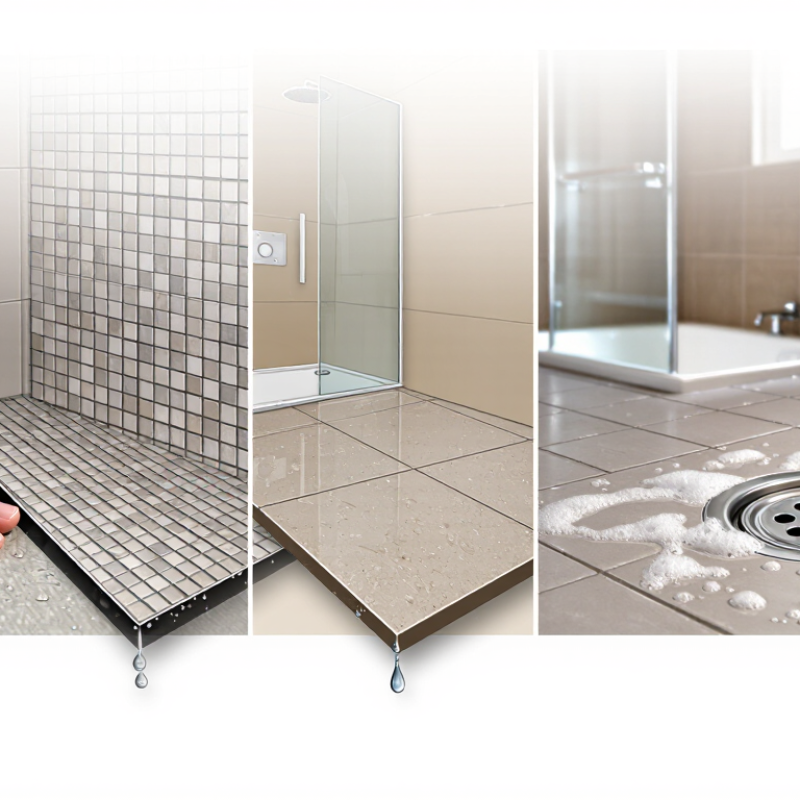
| Textured Porcelain Tile |
Many textured products are tested at or above 0.42 wet DCOF, but the result depends on the surface texture and product design. |
Very low; porcelain is defined by water absorption of 0.5% or less. |
Bathroom floors, shower floors, wet-room floors, and areas with frequent water exposure. |
Highly water-resistant, durable, available in many styles, and generally easy to clean. |
Deep textures can collect soap residue and may require more frequent brushing. |
Excellent choice when the specific product has a suitable wet-floor test result. |
| Small-Format Mosaic Tile |
The tile surface may offer good traction, while the numerous grout joints can improve underfoot grip. Performance still depends on the tile finish. |
Varies by material; porcelain and glass mosaics have different absorption characteristics. |
Shower floors, curved shower bases, and compact bathroom floors. |
Many grout joints, flexible layout, and easier installation on sloped shower floors. |
More grout requires more cleaning and periodic maintenance; glossy mosaics may be slippery when wet. |
Very good for shower floors when a matte or textured finish is selected. |
| Unglazed Quarry Tile |
Usually provides a naturally matte, textured surface with good traction when maintained properly. |
Generally higher than porcelain; exact absorption varies by product. |
Utility bathrooms, commercial-style bathrooms, and floors where a natural matte surface is preferred. |
Durable, naturally slip-resistant surface and good wear resistance. |
Can require sealing; porous surfaces may absorb stains and cleaning chemicals must be chosen carefully. |
Good choice for practical, heavy-use bathroom floors if properly sealed and maintained. |
| Matte Glazed Ceramic Tile |
Can provide adequate traction if the product is specifically tested for wet-floor use; a matte appearance alone does not guarantee slip resistance. |
Usually higher than porcelain, with the exact value determined by the product. |
General bathroom floors and walls; use only floor-rated products on floors. |
Wide range of colors and patterns, often economical, and relatively easy to maintain. |
Some finishes become slippery when wet; standard wall tile must not be used on floors. |
Suitable when the product is floor-rated and has verified wet slip-resistance data. |
| Natural Stone with a Honed or Textured Finish |
Honed or textured surfaces generally provide more traction than polished stone, but results vary considerably by stone and finish. |
Varies widely; some stones are porous and require regular sealing. |
Feature floors, shower walls, and bathroom floors designed with appropriate maintenance procedures. |
Distinctive appearance, natural variation, and a wide range of surface textures. |
May stain, etch, or become less slip-resistant if coated with residue or polished during maintenance. |
Suitable with careful material selection, sealing, and routine cleaning. |
| Polished Porcelain or Polished Ceramic Tile |
Often provides less traction when wet than matte or textured finishes. Do not assume a polished surface is suitable for a wet bathroom floor. |
Porcelain is 0.5% or less; ceramic absorption varies by product. |
Bathroom walls, backsplashes, and low-moisture decorative areas. |
Reflective appearance, smooth surface, and easy routine cleaning. |
Water and soap can create a slippery surface; visible scratches and water spots may also be concerns. |
Generally not the first choice for bathroom floors or shower floors. |
 Prairie Floor